11 hr
Teotihuacan Hot Air Balloon Flight & Pyramids
- Expert local guide
- Small group
- Skip-the-line access
- Free cancellation
Mexico City Hot Air Balloon Over Pyramids — Sunrise Flights & Pyramid Access
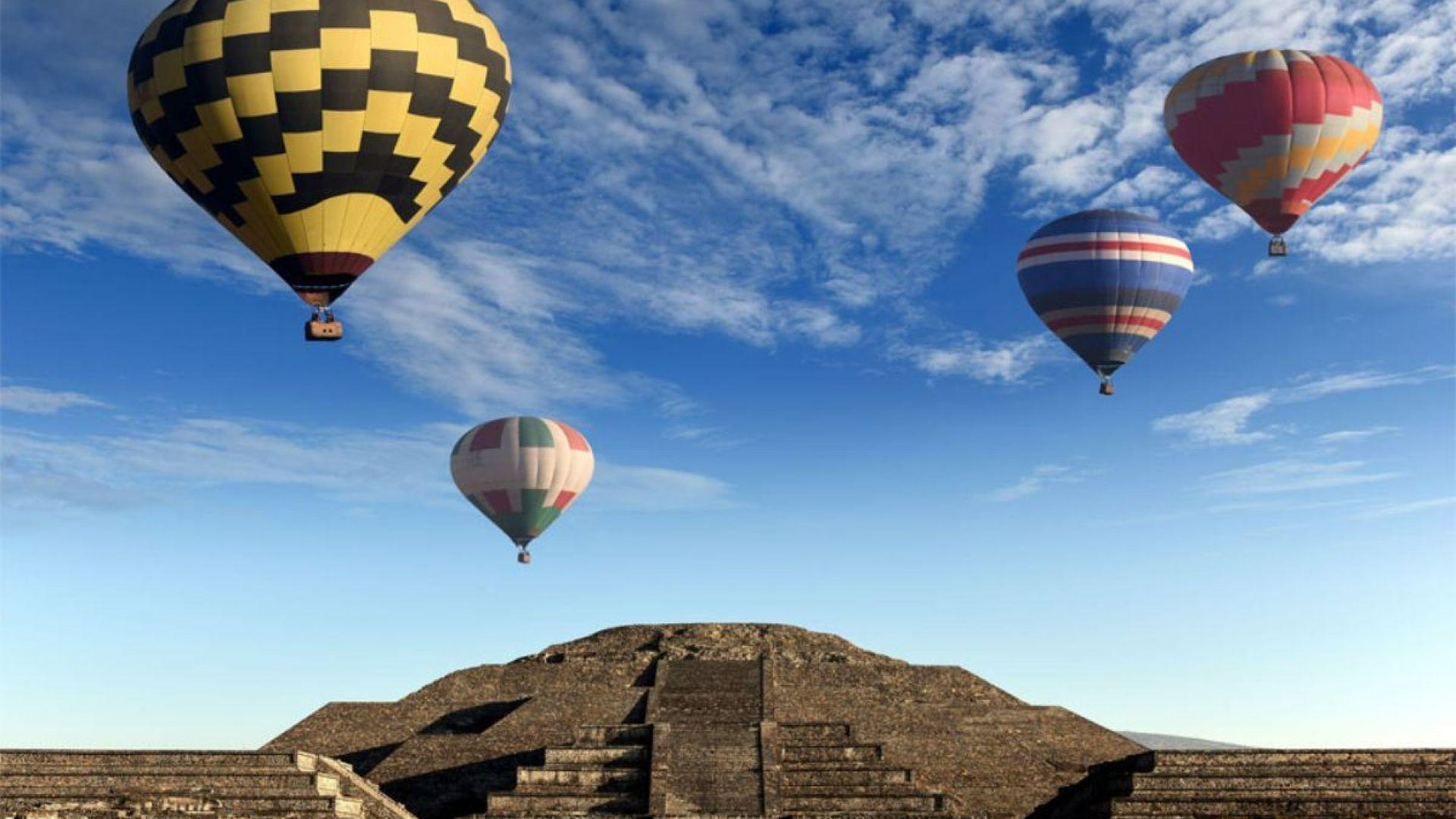
Dawn departure above the Avenue of the Dead, breakfast at altitude
Compare fares, pick the fit — all bookings are mobile-voucher and eligible for free cancellation where shown.
11 hr
11 hr
11 hr
| Experience | Duration | Rating | Skip-the-line | Guide | Small group | Free cancel. | Price | |
|---|---|---|---|---|---|---|---|---|
|
Guided Experience
Most popular
Teotihuacan Hot Air Balloon Flight & Pyramids
|
11 hr | ★ 4.6 | ✓ | ✓ | ✓ | ✓ | €140 | Book → |
|
Guided Experience
Teotihuacan Hot Air Balloon Flight with Breakfast
|
11 hr | ★ 4.6 | ✓ | ✓ | ✓ | ✓ | €139 | Book → |
|
Guided Experience
Teotihuacan Sunrise Balloon Flight with Optional Guided Tours
|
11 hr | ★ 4.6 | ✓ | ✓ | ✓ | ✓ | €145 | Book → |
Worth it for the aerial perspective seekers
A mexico city hot air balloon over pyramids flight runs substantially higher than ground admission—expect packages starting around $120–180 USD per person versus the 210 MXN archaeological zone entry. You're paying for a 45-minute to one-hour dawn float above the Avenue of the Dead, Sun and Moon pyramids, and the sprawling ancient city grid—a vantage point impossible from the climbing restrictions now in place. The experience works best for travelers who've already visited major ruins elsewhere or who prioritize photography and aerial views over close artifact study. If you want to understand Teotihuacan's urban planning, religious symbolism, and murals, budget time for the ground tour (often bundled). For those chasing a bucket-list sunrise balloon ride over one of the Western Hemisphere's largest pre-Columbian cities, the premium delivers. Casual visitors content with pyramid climbing may find the cost hard to justify.
Bottom line: Book a mexico city hot air balloon over pyramids tour if aerial photography and the dawn spectacle outweigh the price gap for you.
They complement each other; most visitors who do both call the balloon flight the more thrilling Mexico City hot air balloon over pyramids tour.
|
Top pick Hot Air Balloon |
Walking Tour | |
|---|---|---|
| Perspective | Aerial bird's-eye view | Ground-level immersion |
| Typical duration | 45–60 minutes | 3–4 hours |
| Best arrival window | 08:00–10:00 | 08:00–10:00 |
| Entry fee | Starting ~2,849 MXN | 210 MXN (foreign adult) |
| Intensity | Relaxed & gentle | Moderate walking |
| Included extras | Toast & breakfast | Site access & museum access |
| See tickets & prices |
Verdict: Choose the flight if you seek a unique sunrise memory, or opt for the walking tour if you want to explore the history of these Mexico City landmarks at your own pace with your own mexico city hot air balloon over pyramids tickets.
Hand-picked experiences loved by thousands of travelers
11 hours
Free Cancellation
Float above ancient pyramids at sunrise, walk historic ruins, and visit Mexico's holiest shrine
5 hours
Free Cancellation
Soar above ancient Mexico in a shared balloon, witnessing the Sun and Moon pyramids from the sky
5 hours
Free Cancellation
Float above ancient pyramids at sunrise, then toast your flight with a traditional ceremony and certificate
5 hours
Free Cancellation
Float above ancient pyramids at sunrise, then toast your journey with a flight certificate to take home
6.5 hours
Free Cancellation
Drift above ancient pyramids at sunrise, toast your landing, and fuel up with breakfast near the ruins.
5 hours
Free Cancellation
Explore Mexico's most iconic archaeological site on a focused half-day journey from the capital.
6 hours
Free Cancellation
Soar above ancient pyramids at dawn in your own hot air balloon, with exclusive pickup and breakfast included
The largest structure at the site, standing over 60 meters tall. It remains a focal point for visitors watching the sunrise during a mexico city hot air balloon over pyramids excursion.
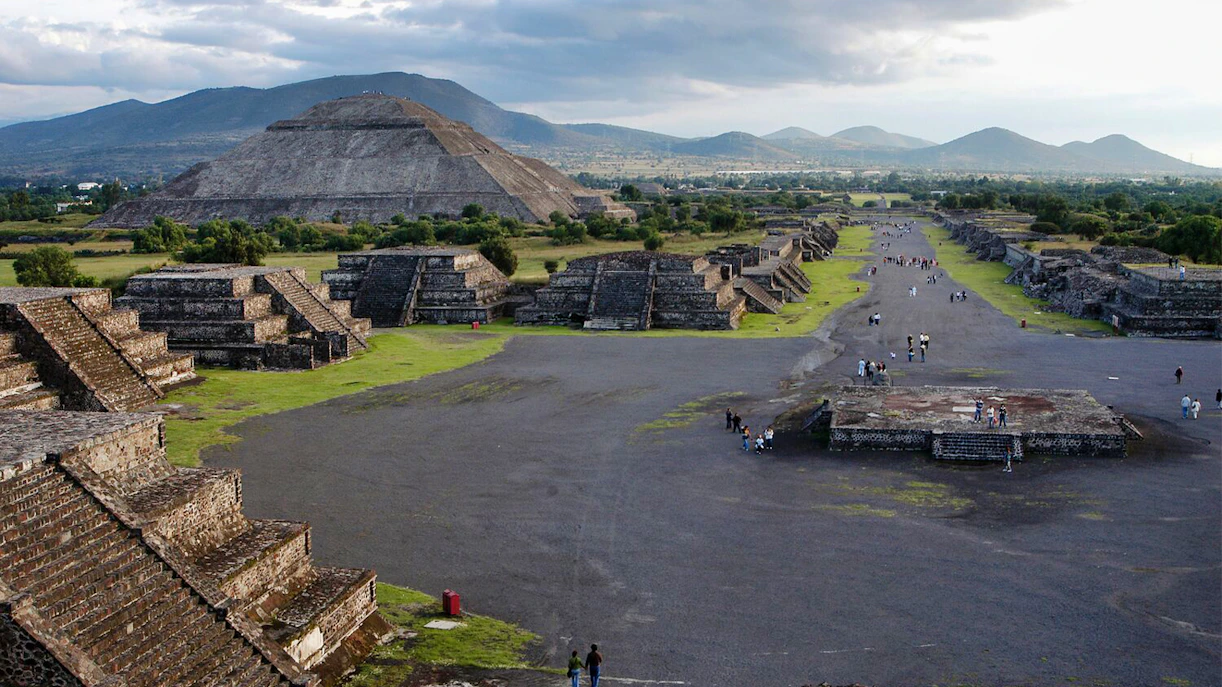
Located at the northern end of the Avenue of the Dead. It offers a majestic view of the entire archaeological site from its base.
The main thoroughfare of the ancient city, connecting the major plazas and pyramids. Walking this path is essential for any mexico city hot air balloon over pyramids tour.
Famous for its intricate stone carvings depicting the deity Quetzalcoatl. It is one of the most visually stunning structures within the complex.
Features beautifully preserved mural paintings and stone pillars. It provides a unique glimpse into the residential architecture of the ancient inhabitants.
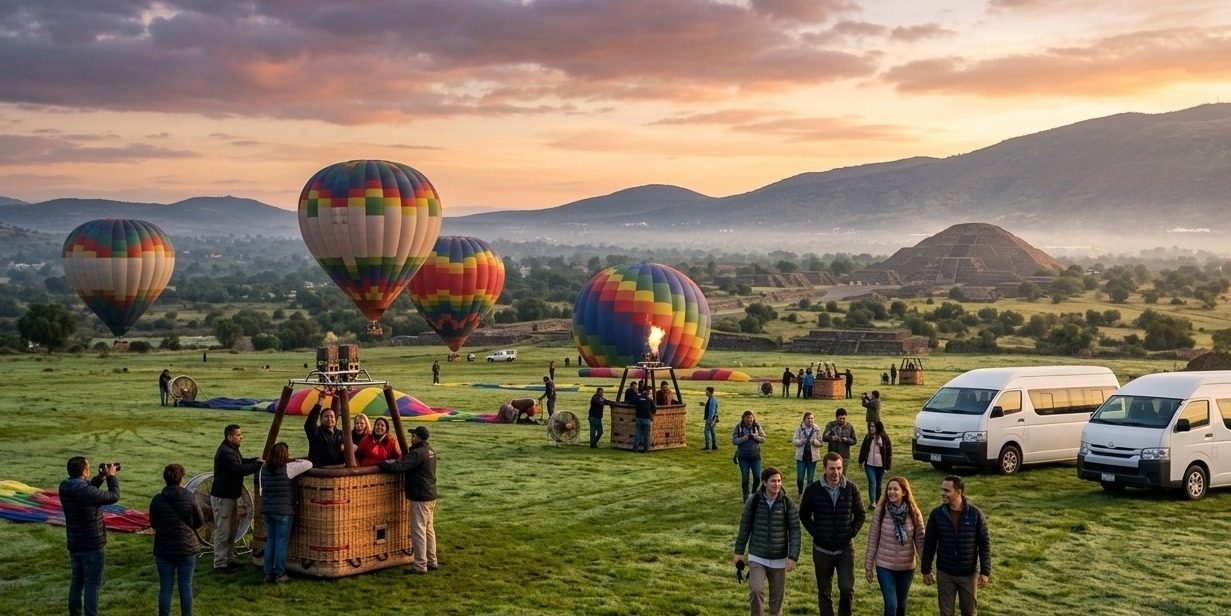
You meet your pilot in the predawn dark at the launch field north of the archaeological zone, where ground crews lay out nylon envelopes across 30 metres of grass. Propane burners roar as the balloons inflate, their panels lifting into vertical position under halogen work lights.
You step into the wicker basket at 06:45, and the tether drops. Ascent is soundless except for the burner's periodic pulse.
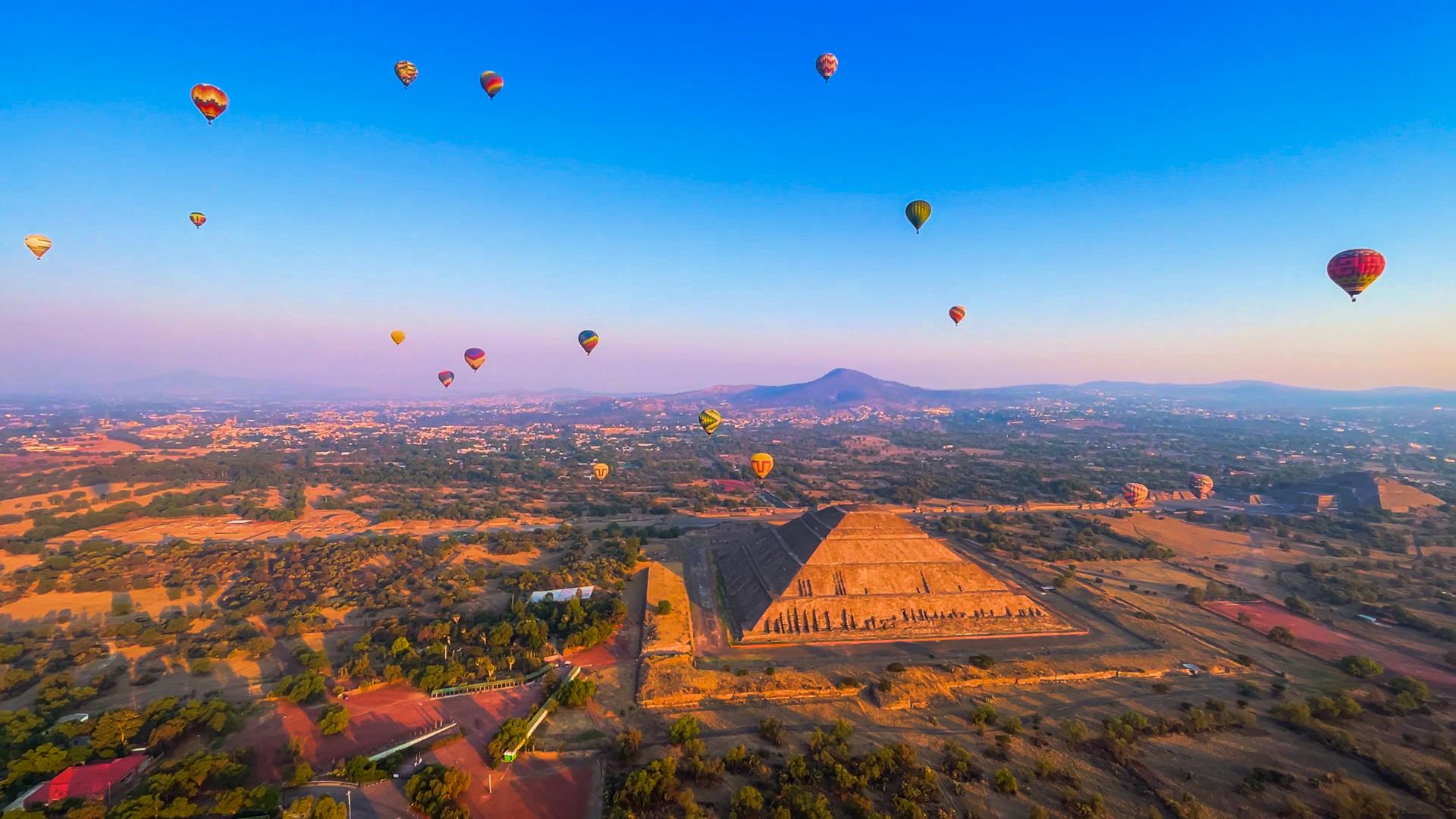
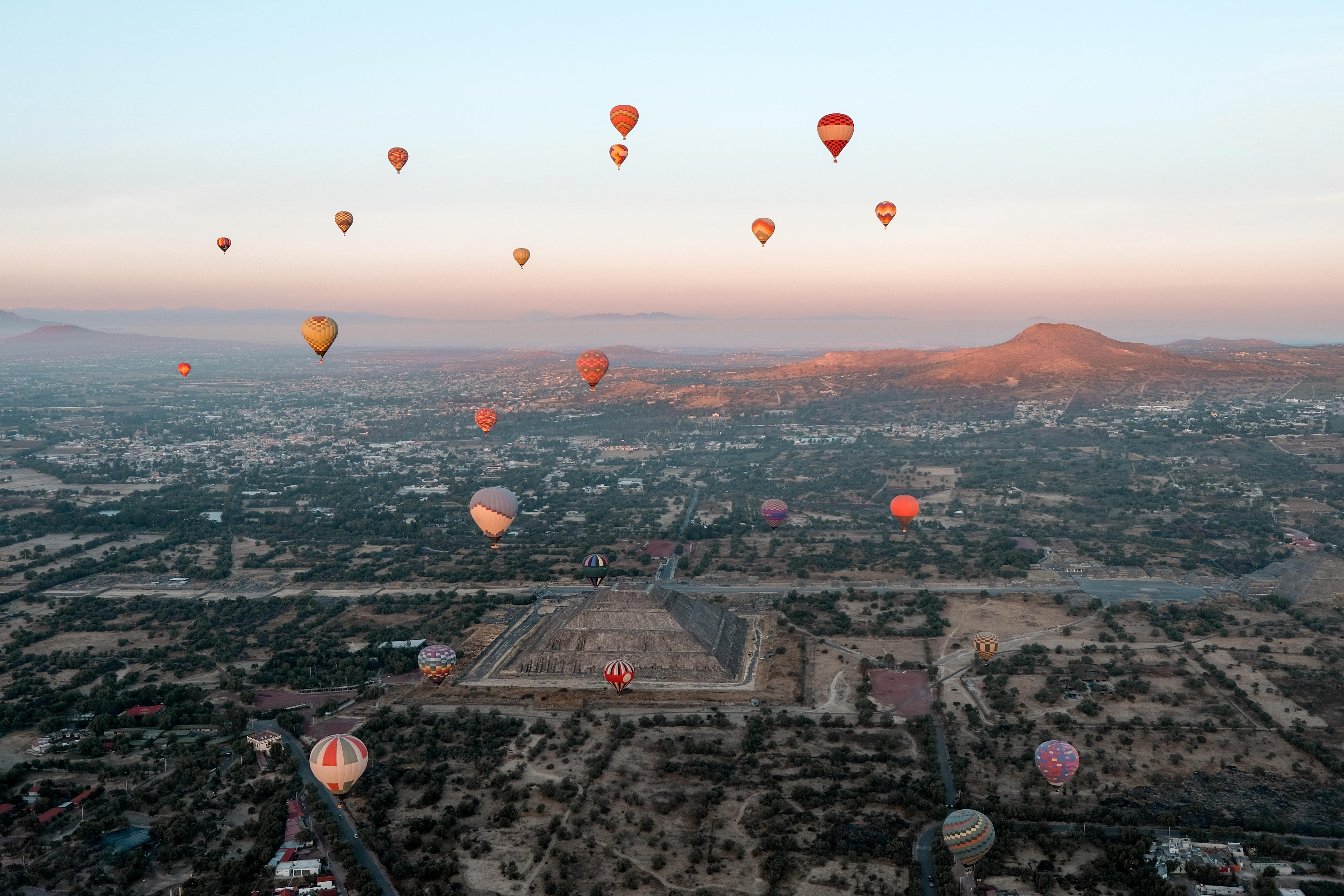
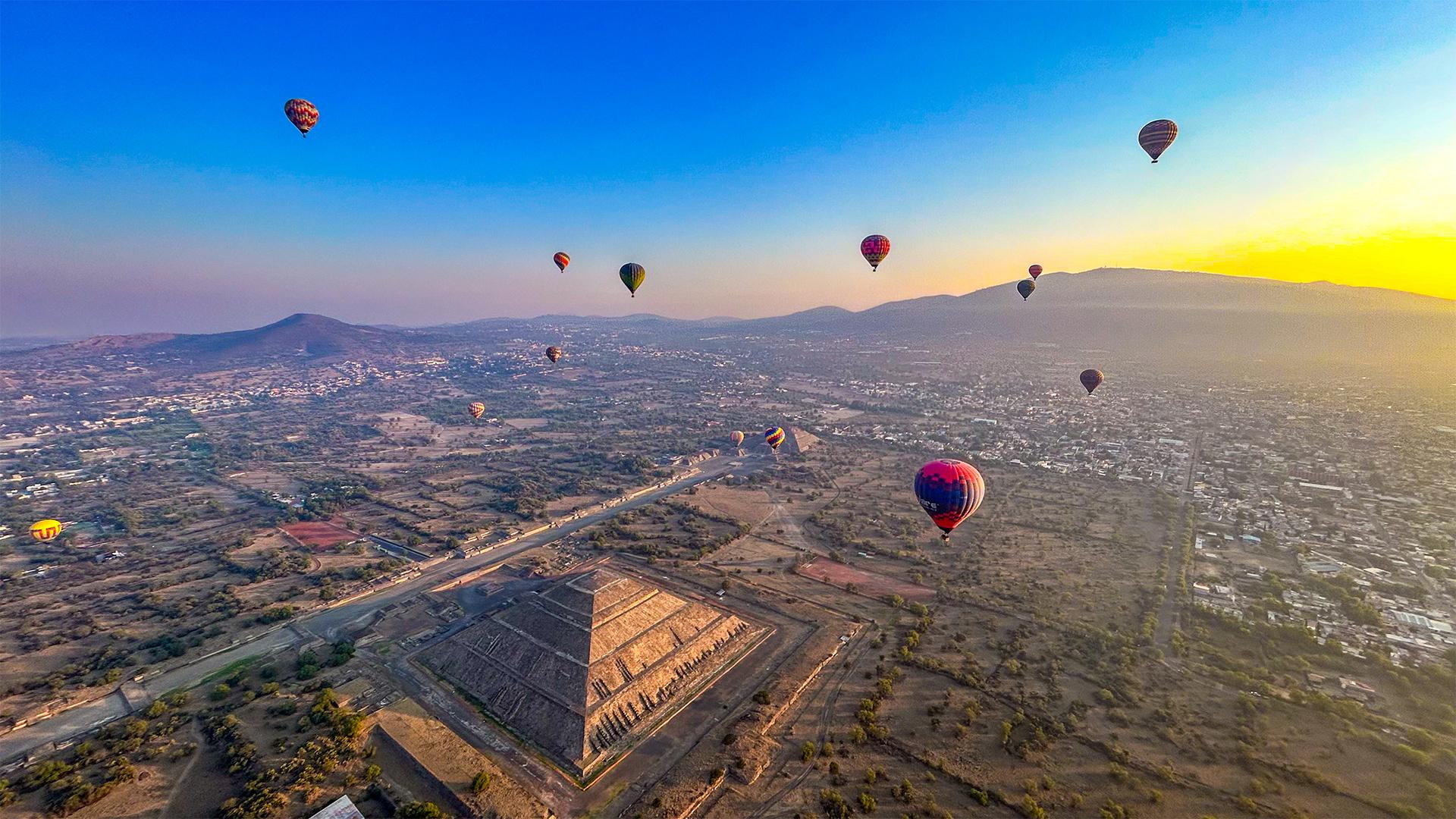
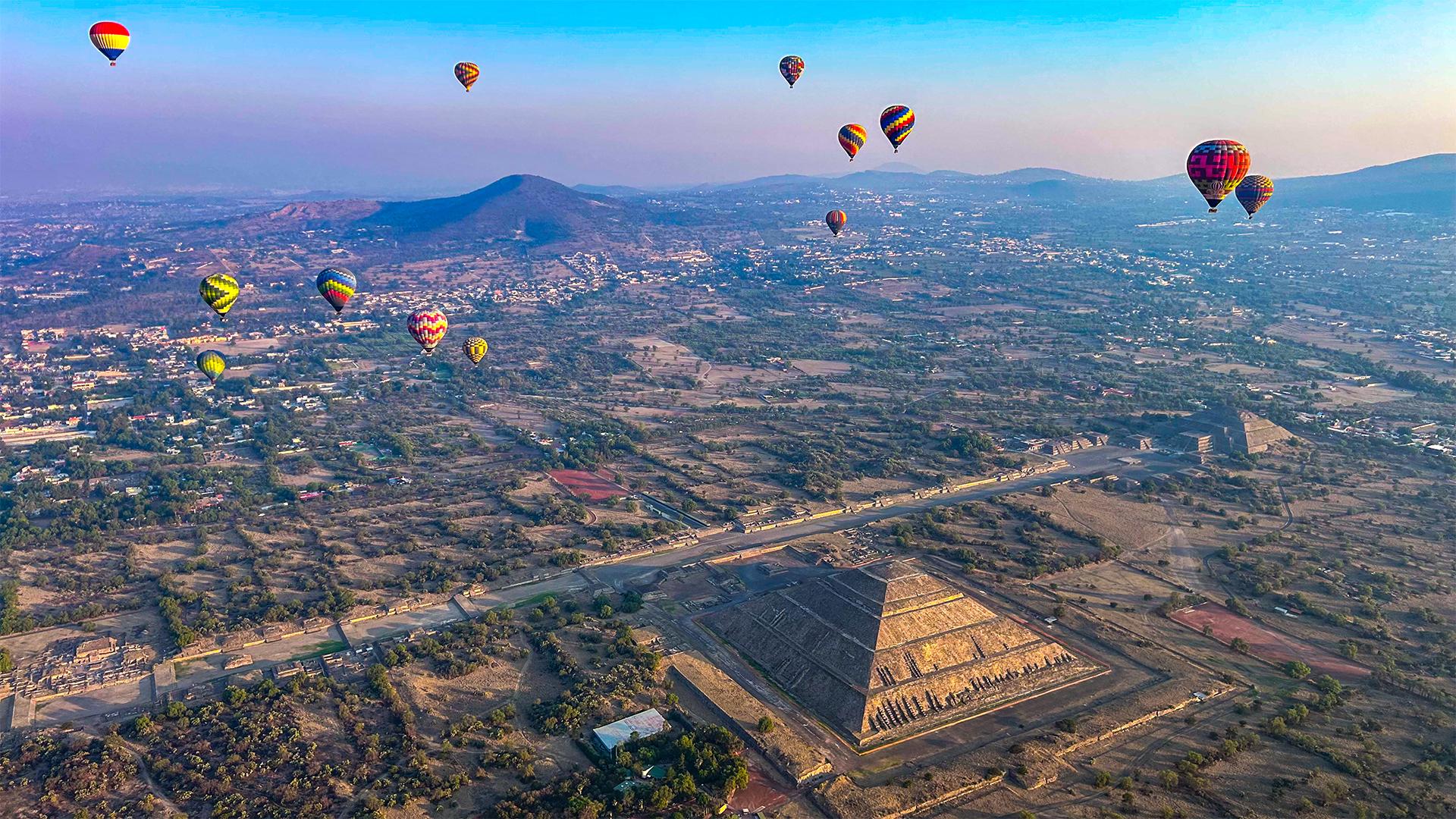
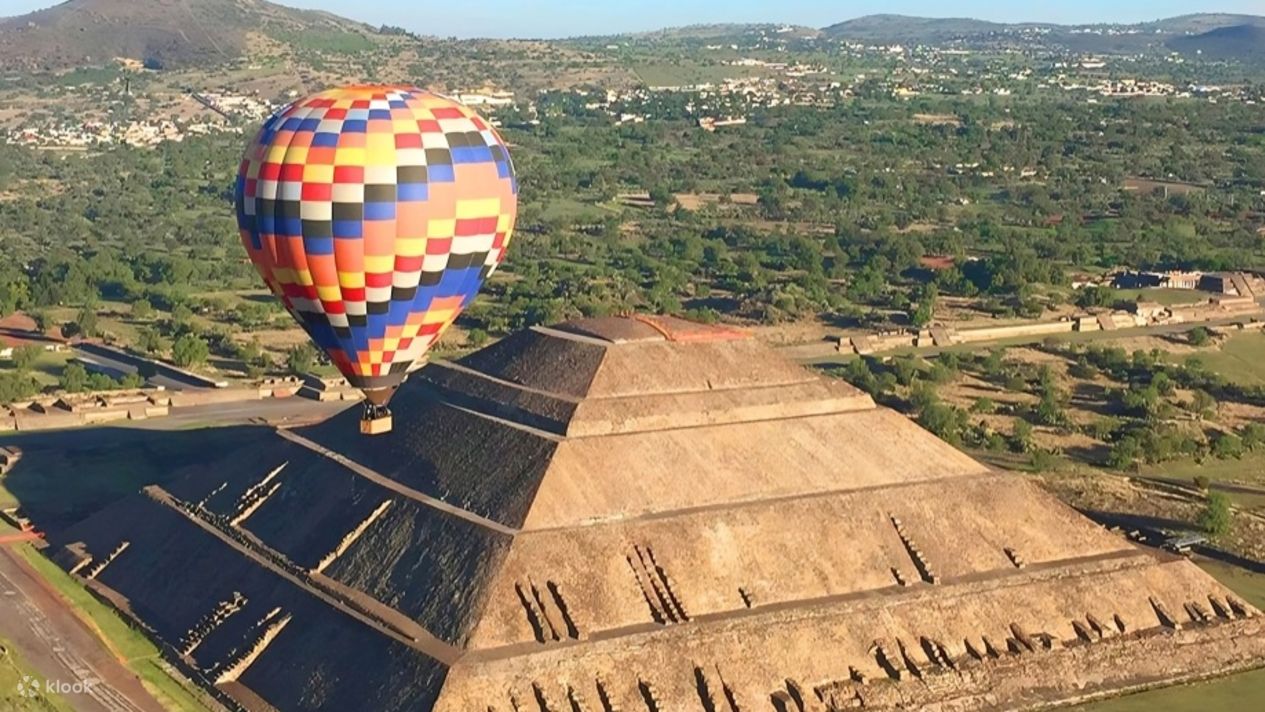
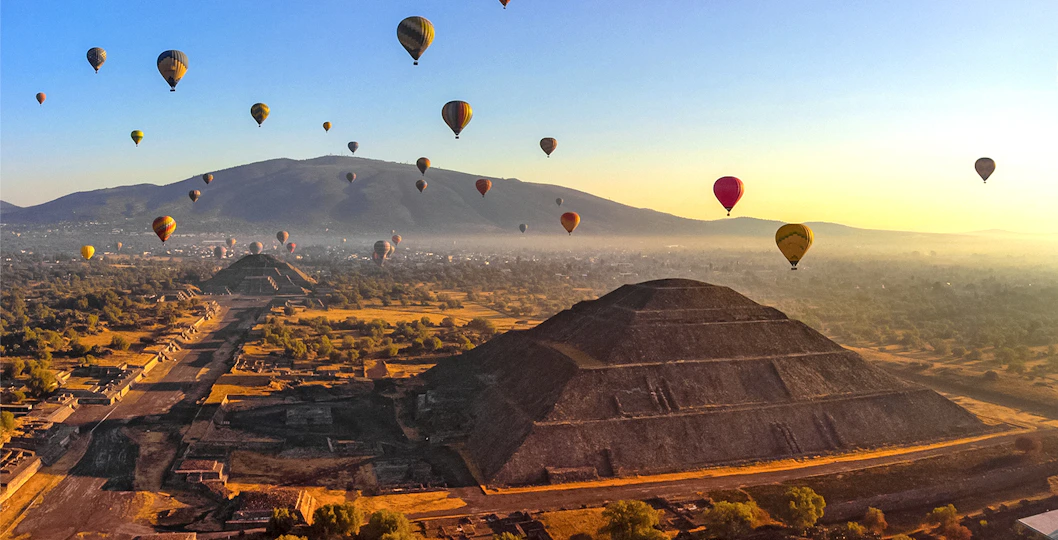
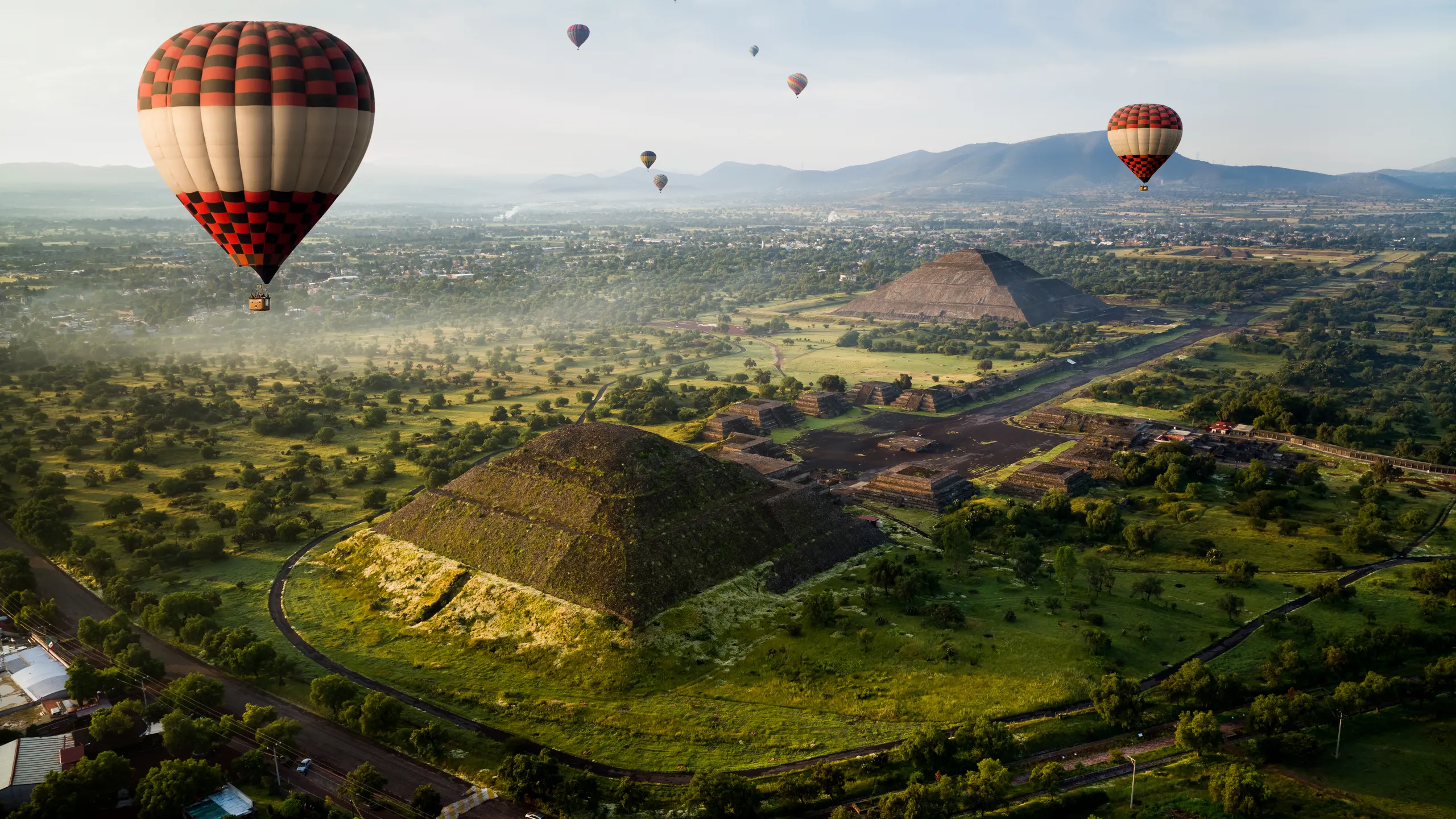
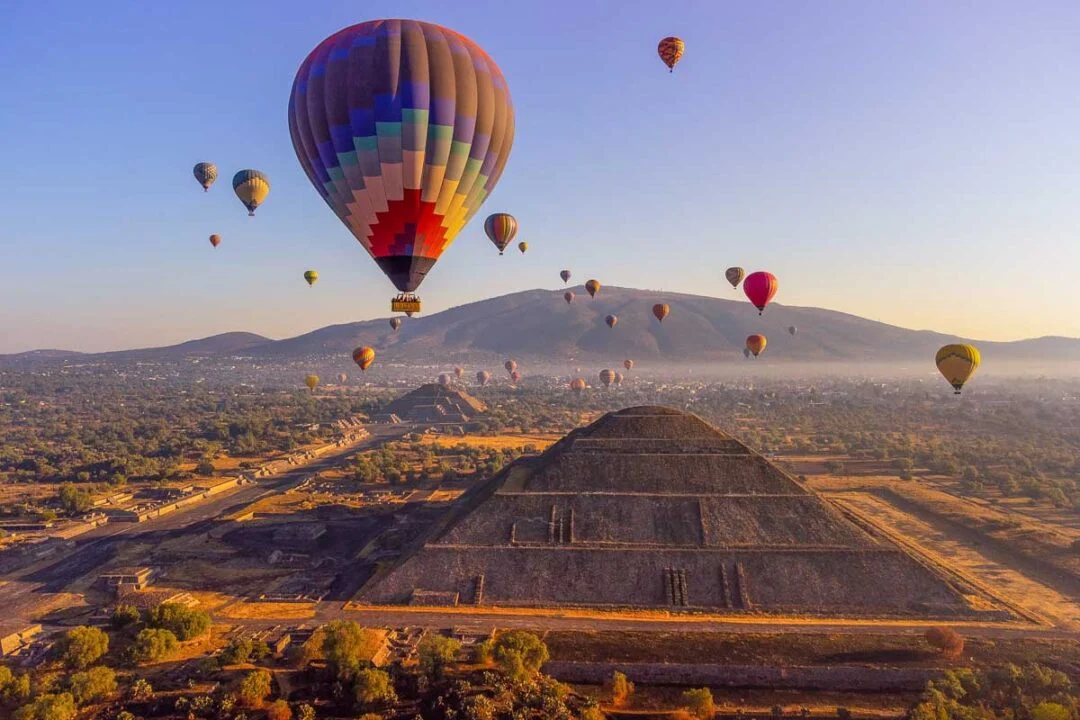
At 200 metres you clear the tree line and the Avenue of the Dead materialises below, a pale corridor running due south toward the San Juan River. The Pyramid of the Sun appears first, its western face still in shadow, then the smaller Temple of the Feathered Serpent emerges inside the Citadel's square enclosure. Your pilot rotates the basket with a vent line, aligning your sight line with the sunrise breaking over the Sierra Nevada range 80 kilometres east. The valley floor is a patchwork of maize fields and volcanic rock, dotted with orange balloons drifting at staggered altitudes.
Descent begins at 07:30, the basket lowering into a harvested field where the ground crew waits with a breakfast spread. You transfer to a van for the five-minute drive to the site entrance, arriving as the gates open at 08:00. The Pyramid of the Sun's 248 steps rise in five diminishing tiers, each platform narrower than the last, and you climb in cool morning air before the valley heats.
All the details about your upcoming adventure in one place
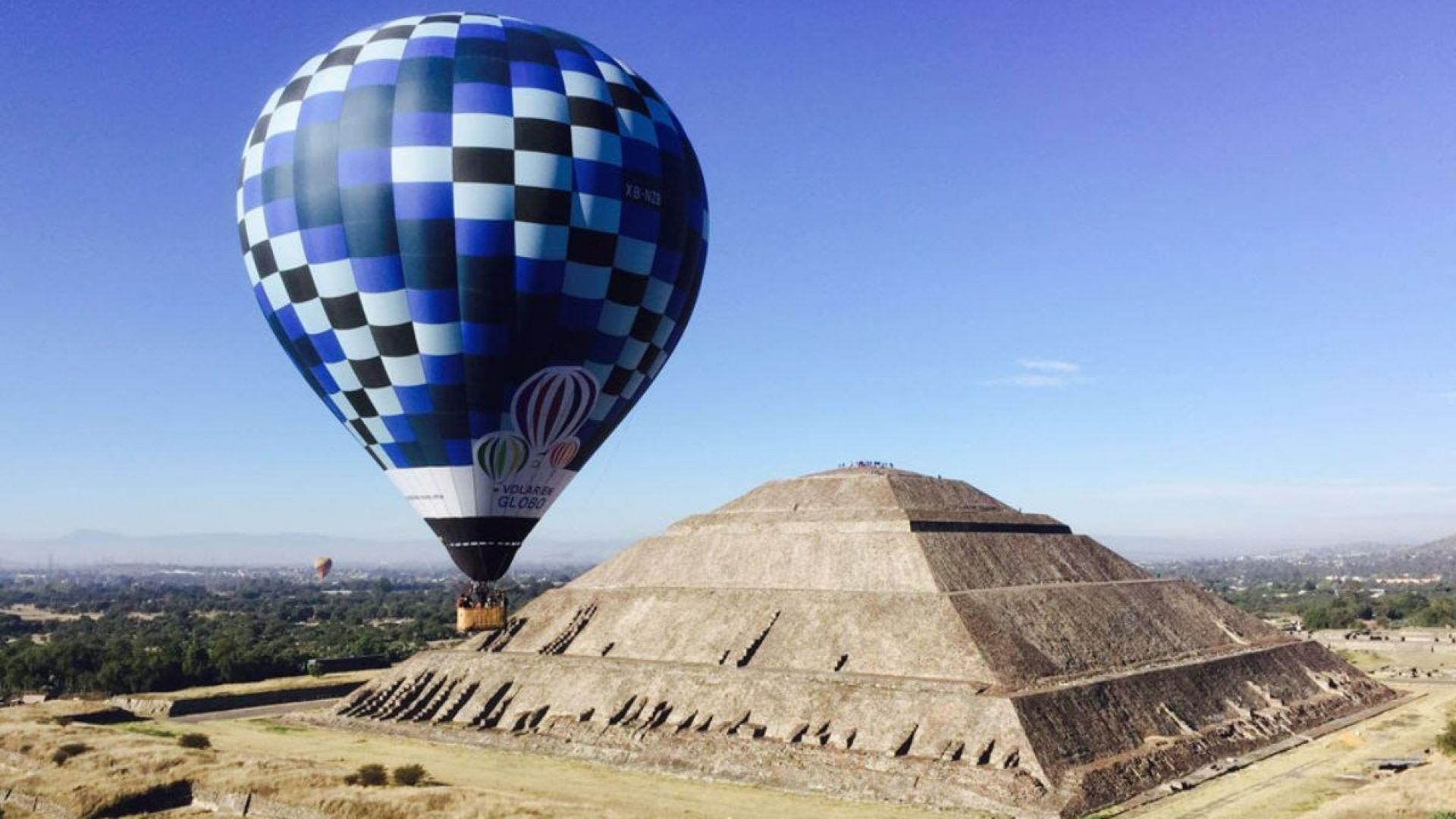
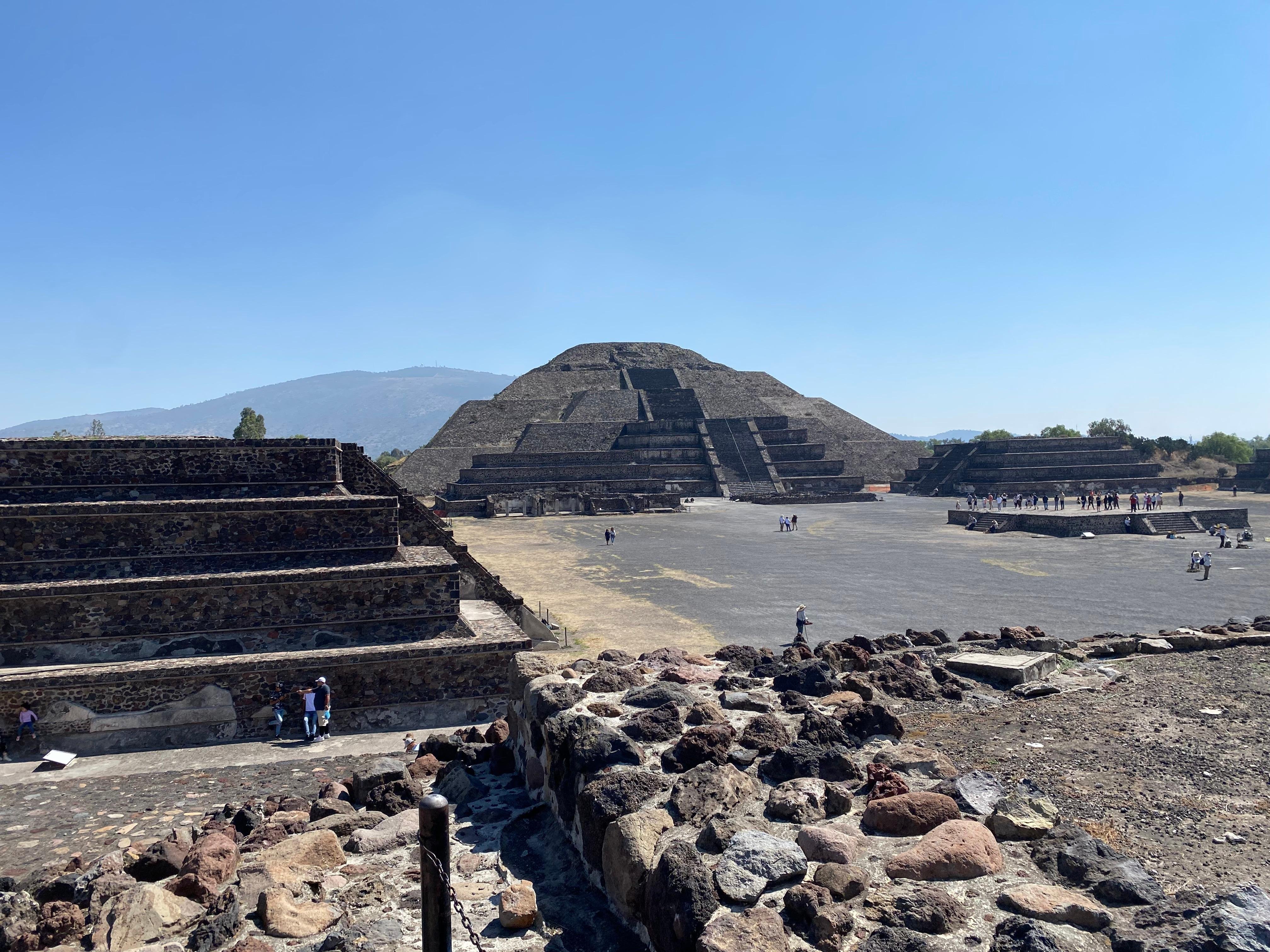
The Pyramid of the Sun rises 65 metres above the Valley of Mexico, its 248 stone steps climbing toward a summit platform that once held a temple dismantled in the sixth century.
Teotihuacan, constructed between 100 BCE and 250 CE, was the largest city in the pre-Columbian Americas, home to an estimated 125,000 people at its zenith. The site was already abandoned for six centuries when the Aztecs arrived and named it "the place where the gods were created." Its original name remains unknown.
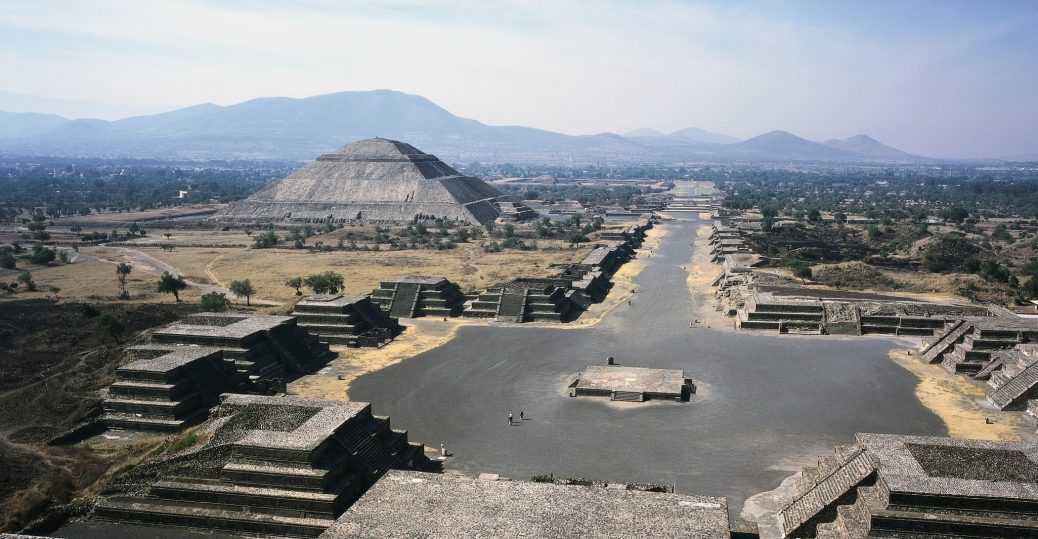
Mexico City hot air balloon over pyramids tours launch exclusively at dawn, when thermal conditions allow stable flight over the archaeological zone's 83 square kilometres. The Avenue of the Dead stretches 2.5 kilometres between the Pyramid of the Moon and the Citadel, flanked by more than 2,000 residential compounds whose mica-dusted plaster once reflected sunlight across the valley. From 300 metres altitude, the site's geometric precision becomes visible: the Pyramid of the Sun aligns 15.5 degrees east of north, matching the setting of the Pleiades on the date the city was founded.
Commercial balloon flights over Teotihuacan began in 1997, following a decade of archaeological surveys that confirmed flight paths would not disturb subsurface structures. Pilots maintain a minimum altitude of 150 metres above the pyramids, ascending to 600 metres over agricultural fields north of the Moon Pyramid. The Federal Civil Aviation Authority limits launches to a three-hour window starting at sunrise, when wind speeds remain below 12 kilometres per hour. Flights conclude before 10:00, when convection currents from the valley floor make controlled descent difficult.
The conservation fee of 210 MXN grants ground access to the archaeological zone between 08:00 and 17:00 daily. Visitors who arrive during the optimal 08:00–10:00 window avoid tour buses departing Mexico City after 09:00, which deliver peak crowds to the site between 11:00 and 14:00. The Pyramid of the Sun remains the third-largest pyramid by volume in the world, surpassed only by Cholula in Mexico and Giza in Egypt. Its 225-metre base and five-tiered silhouette dominate the valley, visible from balloon baskets throughout the hour-long flight.

The Avenue of the Dead stretches 2.5 kilometres between the Pyramid of the Moon and the Citadel, flanked by more than 2,000 residential compounds whose mica-dusted plaster once reflected sunlight across the valley.
Wear light, breathable clothing and a hat to protect against the sun. Sturdy, comfortable walking shoes are essential for navigating uneven stone surfaces.
Small daypacks are generally allowed but may be checked at entry points. Large luggage should be left at your accommodation or in your transport vehicle.
Personal photography is permitted throughout the archaeological zone. Professional tripod equipment or drone usage requires prior authorization from INAH.
The site is family-friendly, though parents should prepare for significant walking. Bring adequate sun protection and water for children, as shade is limited.
The site features expansive, unpaved terrain that can be challenging for visitors with limited mobility. Some areas near the major pyramids have steep, uneven inclines.
Carry a refillable water bottle to stay hydrated. While some vendors operate nearby, it is best to bring snacks as options inside the archaeological zone are limited.
Free entry for Mexican residents
Opening hours
08:00–17:00 daily
Address
Ecatepec Pirámides km.22 + 600, Municipio de Teotihuacan, Estado de México, C.P. 55800
Entry
210 MXN conservation fee (foreign adult)
Best arrival
08:00–10:00
Navigation
Use Gate 1 or Gate 2 entrances
Public transport · 75 min · ~120 MXN
Take a bus from Autobuses del Norte station to the archaeological zone entrance.
Car · 60 min · Tolls apply
Follow Federal Highway 132D north toward the pyramids.
Tours often offer free cancellation up to 24-48 hours before the experience. Please verify individual tour operator terms regarding the 210 MXN conservation fee.
Recommended time
4-6 hours
Planning your trip requires balancing a morning mexico city hot air balloon over pyramids flight with an exploration of the archaeological site. Securing mexico city hot air balloon over pyramids tickets for the earliest departure allows you to enter the complex during the best arrival window: 08:00–10:00. Those opting for mexico city hot air balloon over pyramids tours should allocate extra time for ground transport and navigating the expansive Avenue of the Dead. Most travelers find that this schedule helps avoid midday heat and the largest crowds arriving from the capital, ensuring a smoother experience at these ancient landmarks.
Crowd levels through the day
Weather · crowds · average price — dots go green to amber to red as each metric rises.
September to November offers cooling temperatures post-rainy season. Skies start clearing for a mexico city hot air balloon over pyramids experience.
December to February provides clear, crisp days ideal for viewing pyramids without heat fatigue.
March to May is peak season with mild weather, perfect for a mexico city hot air balloon over pyramids tour.
June to August brings warmer temperatures and occasional afternoon showers, requiring early starts.
Arrive at 08:00 to explore before the tour buses arrive from the city.
The site we now associate with mexico city hot air balloon over pyramids tours was built by a civilization whose name remains unknown. Construction began around 100 BCE. By 200 CE, Teotihuacan had grown into Mesoamerica's largest city, with a population exceeding 100,000. The Pyramid of the Sun, completed around 200 CE, rose 65 meters above the Valley of Mexico. Workers moved an estimated 1 million cubic meters of stone and earth without metal tools or draft animals. The Pyramid of the Moon followed by 250 CE, anchoring the northern end of the Avenue of the Dead. Teotihuacan controlled obsidian trade routes and exported its pottery across present-day Mexico and Guatemala. Multi-family apartment compounds housed artisans who produced ceramics, textiles, and stone tools. The city's influence peaked between 400 and 500 CE. Murals inside the Tepantitla compound depicted a paradise realm, while the Temple of the Feathered Serpent displayed serpent heads carved in limestone. Around 550 CE, fires destroyed the ceremonial core. Archaeologists debate whether invasion, internal revolt, or environmental collapse caused the sudden burning of elite structures along the Avenue of the Dead. The city was abandoned by 650 CE. Centuries later, the Aztecs discovered the ruins and named the site Teotihuacan, meaning "place where gods were created." They believed giants had built the pyramids. Spanish chroniclers recorded Aztec pilgrimage traditions in the 1540s. Systematic excavation began in 1905 under archaeologist Leopoldo Batres, who removed later additions from the Pyramid of the Sun. UNESCO designated Teotihuacan a World Heritage Site in 1987. Today, balloon flights over the pyramids launch from adjacent fields at dawn, offering aerial views of the ancient urban grid that once housed the Western Hemisphere's first major metropolis.
Construction begins on the urban core and the foundation of the Pyramid of the Sun.
The Pyramid of the Sun is completed, making it the third-largest pyramid in the world by volume.
Teotihuacan reaches its peak population of over 100,000, dominating trade networks across Mesoamerica.
Fire destroys the ceremonial center; elite palaces along the Avenue of the Dead are burned and abandoned.
The city is fully depopulated, leaving behind pyramids and residential compounds for future civilizations to discover.
Aztecs discover the ruins, name the site Teotihuacan, and incorporate it into their cosmology.
Mexican archaeologist Leopoldo Batres begins systematic excavation, removing later structures from the Pyramid of the Sun.
UNESCO designates Teotihuacan a World Heritage Site, recognizing its importance as a pre-Columbian urban center.
Stand at the northern end of this central corridor for a symmetrical composition of the archaeological site including the Pyramid of the Moon.
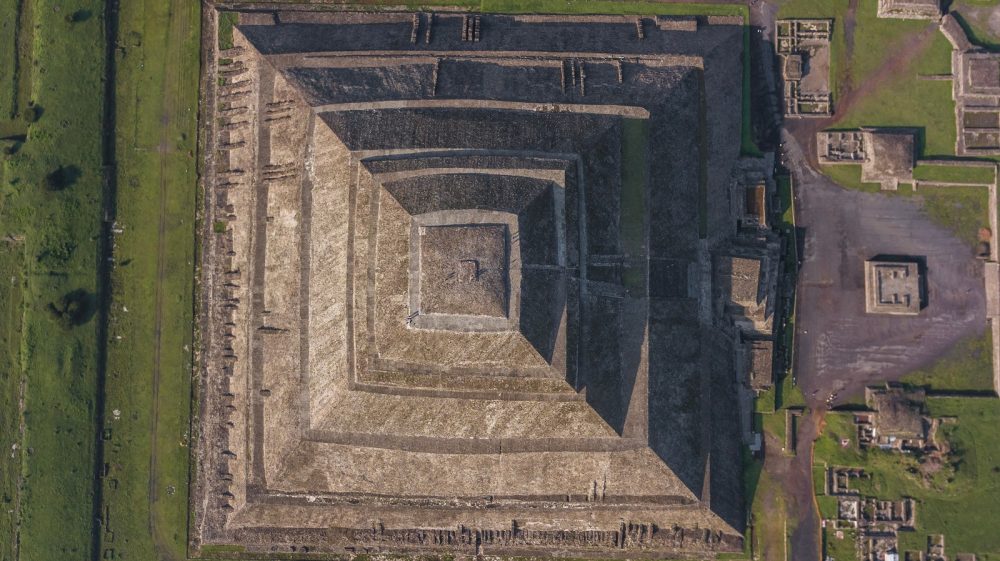
Capture the scale of the structure by positioning your camera from the air during a mexico city hot air balloon over pyramids flight to emphasize the vast stone masonry.
Frame the smaller temples and the main plaza area from the ground level to show the relationship between the historic complex and the desert landscape.
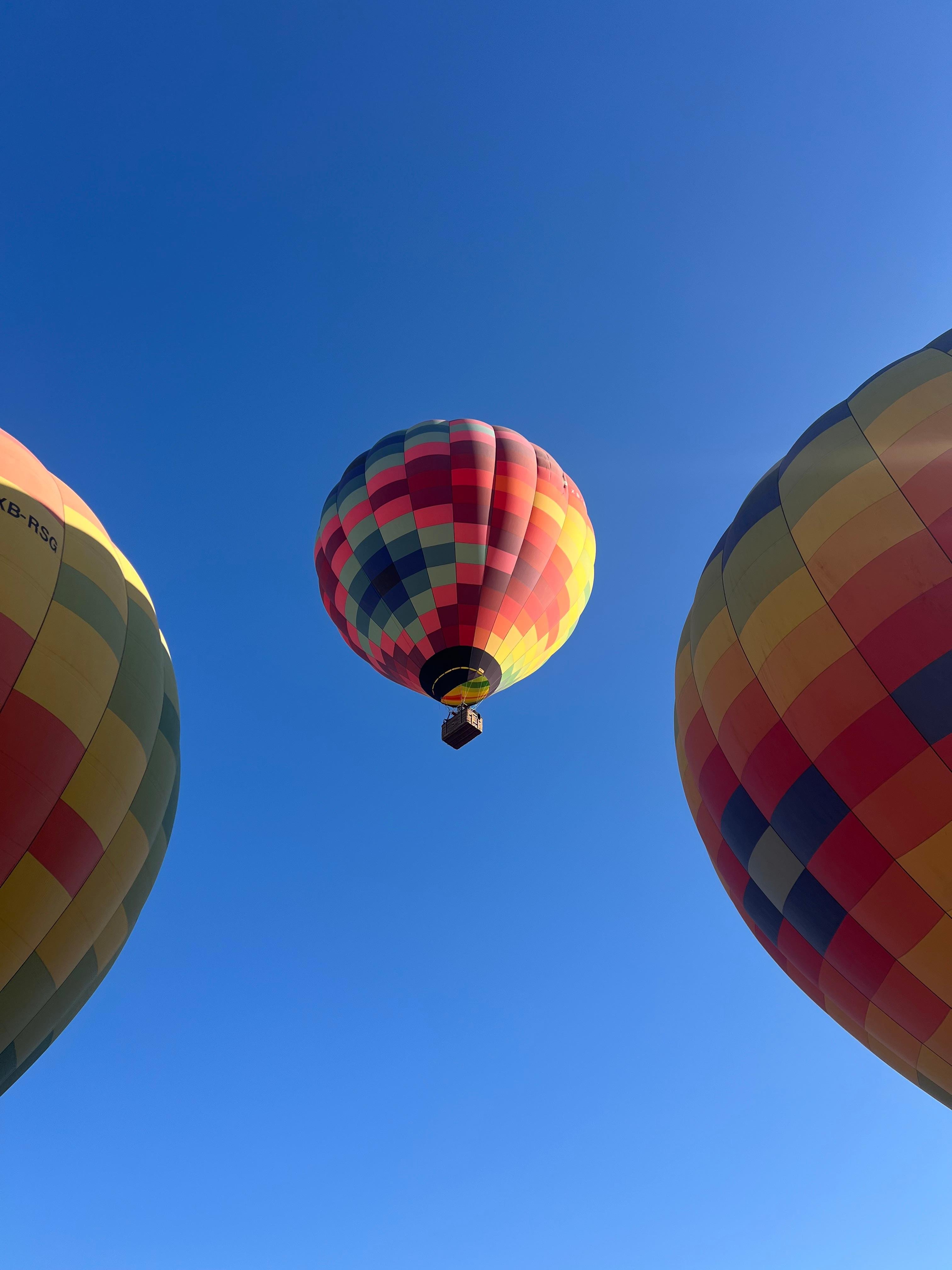
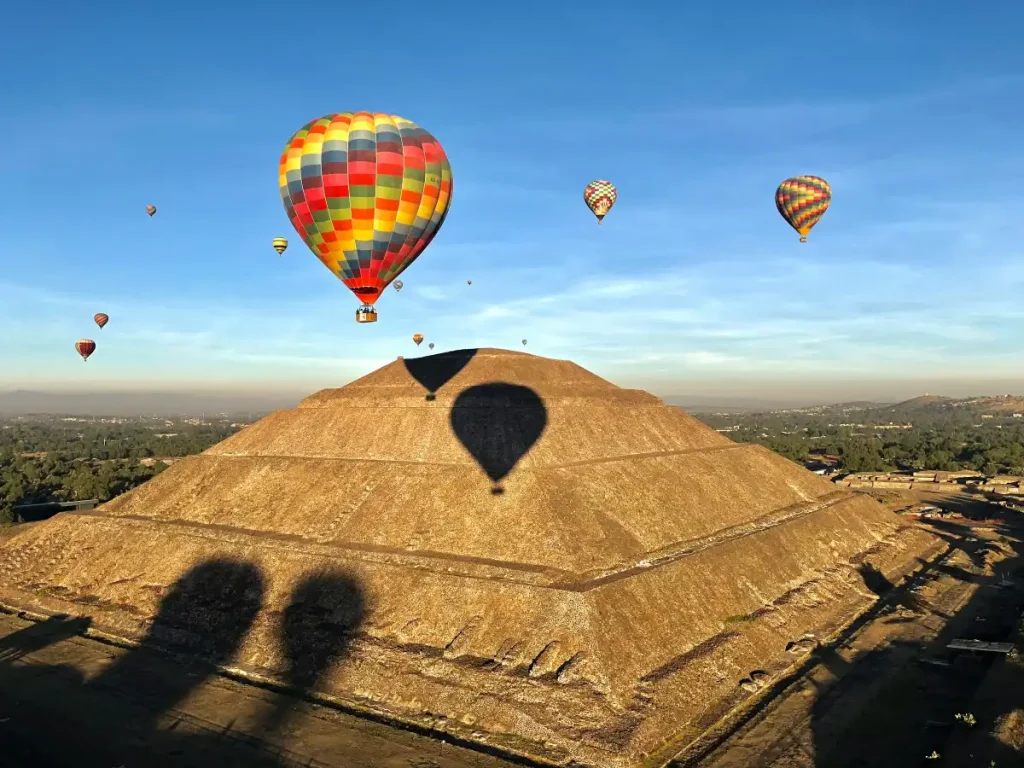
Shoot outward from the wicker frame while in the air to capture the shadows cast by the sun over the ancient ruins below.
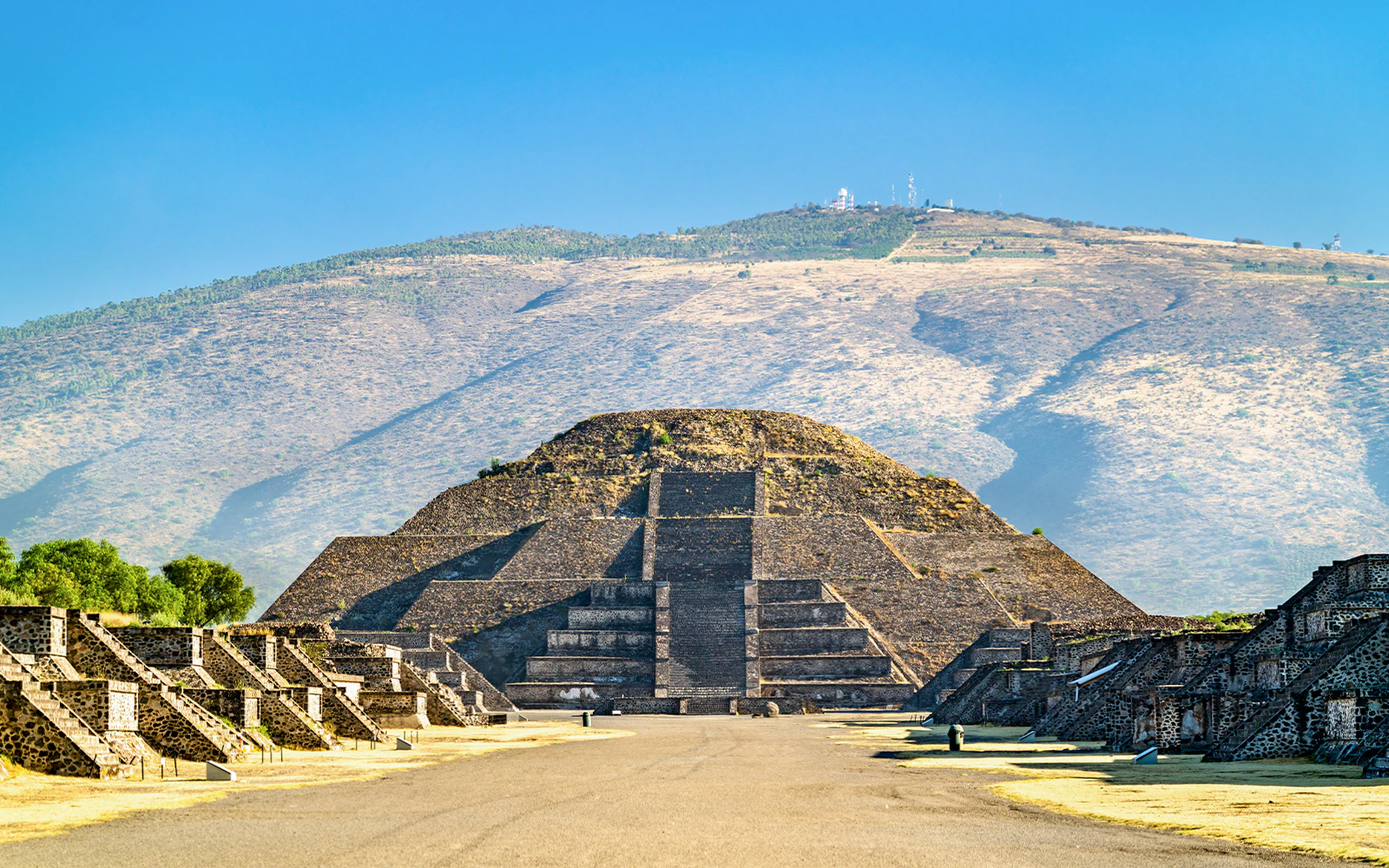
Use a wide lens from the southern perimeter to fit the entirety of the UNESCO heritage site and the mountain backdrop into a single frame.
Planning a mexico city hot air balloon over pyramids adventure requires careful preparation to ensure children remain comfortable throughout the morning. This ancient site offers vast open spaces where young explorers can learn about Mesoamerican history while observing the monumental stone architecture from the ground.
The volcanic rock terrain and uneven paths make strollers impractical for most of the site, so a supportive baby carrier is recommended for infants. Carrying toddlers for long stretches can be tiring, so plan for frequent breaks in the shade.
While the aerial experience often requires children to be at least four years old for safety, the archaeological zone itself is better suited for children aged six and up who can manage the extensive walking required to see the structures. Most mexico city hot air balloon over pyramids tours enforce strict height or age requirements for flight.
Public restrooms are available near the main entrances, though baby-change facilities are limited. Pack a dedicated travel kit for personal hygiene as these public stations may lack supplies.
Bring plenty of bottled water and snacks, as the walking distances between the Sun and Moon pyramids are significant. Purchasing mexico city hot air balloon over pyramids tickets often includes breakfast, but confirming kid-friendly menu options beforehand is wise for picky eaters.
Follow the best arrival window of 08:00–10:00 to complete your exploration before the midday heat intensifies. Limiting your visit to the main promenade allows you to see the key landmarks without exhausting young children.
Dining options near the archaeological site are concentrated in the surrounding town, making it easy to grab a meal after your mexico city hot air balloon over pyramids flight. While some snacks are available near the gates, most visitors prefer the traditional restaurants located just a short walk or drive away after finishing their mexico city hot air balloon over pyramids tour.
Located inside a natural volcanic cave, this venue serves traditional Mexican cuisine like escamoles and barbacoa. It provides a unique atmosphere for those who have finished their mexico city hot air balloon over pyramids tickets and want a sit-down meal.
This establishment offers standard buffet and à la carte options catering to groups and independent travelers alike. It is a convenient choice for a quick lunch before heading back to the city.
Everything you need to know for your journey
Teotihuacan is open daily from 08:00 to 17:00.
Yes, the entrance fee is 210 MXN per foreign adult visitor.
Booking a mexico city hot air balloon over pyramids tour in advance is recommended to ensure availability.
The best arrival window is 08:00–10:00 to avoid mid-day heat.
Yes, items like drones and professional filming gear are prohibited at Teotihuacan.
Yes, the site is open to families, but please bring plenty of water and sun protection.
Most visitors take a bus from the North Bus Station in Mexico City to the archaeological zone.
Yes, personal photography is permitted, but tripods require special authorization.
Most operators offer free cancellation 24-48 hours before your mexico city hot air balloon over pyramids tour.
Features artifacts recovered from the site and historical context.
Noted for its intricate stone carvings and preserved murals.
Local hotels and guest houses in the nearby town area.
Wide range of luxury and boutique options in the capital.
Join thousands of happy travelers who have discovered this incredible experience
Book Your Experience Now