

Quick answer
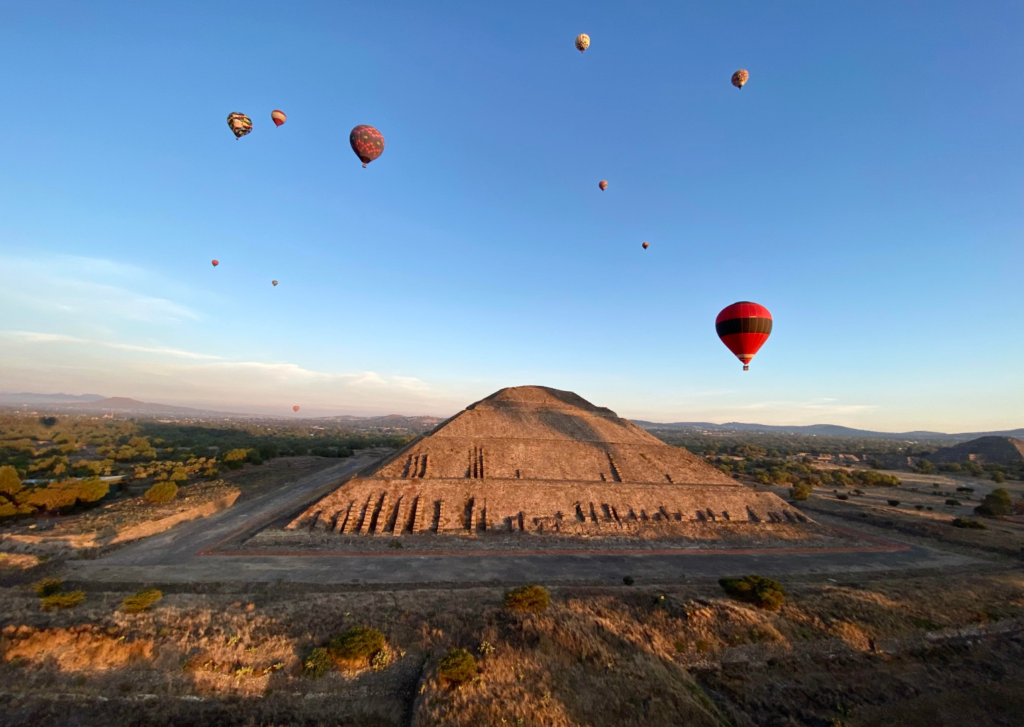
Mexico city hot air balloon safety at Teotihuacan depends on pilot certification through the Dirección General de Aeronáutica Civil, mandatory pre-flight envelope inspections, real-time wind speed monitoring and passenger weight distribution protocols. Operators cancel flights when surface winds exceed 8 knots or upper-level winds reach unsafe thresholds, typically checking conditions between 04:30 and 05:00 before the scheduled launch window. Every commercial balloon must carry liability insurance and file a flight plan with local air traffic coordination.
Commercial balloon operators flying above the archaeological zone hold Type II rotorcraft licenses issued by Mexico's aviation authority, a credential requiring 35 flight hours, written exams covering meteorology and airspace regulations, and biennial medical clearances. Pilots brief passengers on basket entry techniques, the brace position for landing and emergency fuel-vent procedures before ignition, a sequence mandated in the operator's safety management manual. The envelope—the fabric canopy—undergoes visual inspection for tears, seam fatigue and burner-crown scorching each morning. Ground crews verify that the basket's load cables show no fraying and that the propane system pressure gauges read within operational range. Weight distribution matters: most baskets accommodate 8 to 12 passengers, with total load limits between 900 and 1,100 kilograms depending on envelope volume. Operators weigh passengers during check-in and assign compartment positions to balance the load, a step that prevents tipping during ascent or landing. Weather determines whether a flight proceeds. Surface wind speed, measured by handheld anemometer at the launch field, must remain below 8 knots; upper-level wind data comes from the regional meteorological station and pilot observation of cloud movement. Thermal activity begins building after 07:00 as the valley floor heats, creating turbulence that closes the safe launch window. Flights scrubbed for wind typically move to the following morning rather than a later hour the same day, because afternoon conditions over Teotihuacan exceed operational limits. Mexico city hot air balloon safety protocols also govern the descent. Pilots radio ground crews with estimated landing coordinates, allowing chase vehicles to position in open fields away from the archaeological perimeter and the town of San Martín de las Pirámides. The final approach involves venting hot air in controlled bursts to reduce altitude gradually, with passengers instructed to hold the basket's internal handles and bend their knees. Hard landings occur when wind shear alters descent rate unexpectedly, but structural design—wicker construction and shock-absorbing load cables—distributes impact force across the frame rather than concentrating it at passenger contact points.
“Every commercial balloon must carry liability insurance and file a flight plan with local air traffic coordination.”
Mexico City Hot Air Balloon Safety and Operational Standards
Understanding the regulatory landscape helps travelers identify professional hot air balloon operators at the Teotihuacan site.
Federal Aviation Authorization
Verify that your operator holds an active Air Operator Certificate issued by the Mexican Federal Civil Aviation Agency (AFAC). Pilots must display a valid commercial balloon pilot license upon request.
Weather Monitoring Protocols
Certified operators utilize real-time meteorological data to assess wind speed, thermal activity, and visibility before clearing a flight. Flights are grounded immediately if wind conditions exceed the manufacturer's safety limits for the specific balloon model.
Equipment Inspection Standards
Balloons must undergo periodic airworthiness inspections and maintain a documented maintenance logbook. Check for the presence of current inspection stamps on the balloon envelope and burner assembly during your pre-flight briefing.
Mandatory Insurance Coverage
Legitimate commercial balloon operators in Mexico are required by law to carry civil liability insurance covering passengers and third parties. Ask to see the policy documentation to confirm it is current and active for the current calendar year.
Pre-Flight Safety Briefings
Pilots are required to conduct a thorough safety demonstration covering landing positions and emergency procedures before takeoff. Pay close attention to these instructions as they contain specific protocols tailored to the basket design and current wind conditions.
Mexico City Hot Air Balloon Safety: Common Mistakes to Avoid
Hot air balloon flights over Teotihuacan are generally safe when passengers follow operator guidelines and verify credentials. Most incidents stem from ignoring weight limits, choosing unverified operators, or disregarding pre-flight health warnings.
Booking with uncertified operators to save money
Verify your operator holds valid certifications from Mexico's civil aviation authority (DGAC) and carries liability insurance. Licensed operators follow mandatory safety protocols and maintain aircraft to regulatory standards.
Ignoring weight and health restrictions during booking
Declare your accurate weight and disclose heart conditions, recent surgeries, or severe joint problems. Weight limits ensure safe payload distribution, and physical limitations matter—you'll stand for 45–60 minutes and climb in and out of the basket.
Arriving unprepared for early departure times
Flights launch at sunrise (typically 06:00–07:00) when winds are calmest. Set multiple alarms, arrange transport the night before, and confirm your pickup time with the operator 24 hours ahead.
Wearing inappropriate clothing or bringing prohibited items
Wear closed-toe shoes with ankle support, long pants, and layers for temperature changes at altitude. Leave large bags, selfie sticks, and drones behind—they're prohibited in the basket and at the archaeological site.
Failing to follow pilot instructions during landing
Listen carefully during the pre-flight safety briefing and hold the designated handles when instructed. Landings can be bumpy; passengers who ignore brace positions risk injury during touchdown.
Optimal Timing for Mexico City Hot Air Balloon Safety
Hot air balloon flights operate exclusively during the early morning hours to prioritize safety, as this period offers the most stable atmospheric conditions and minimal wind speeds. Launching before the sun fully heats the ground prevents the thermal turbulence that occurs later in the day.
November to February
Moderate crowdsCool mornings, 5°C to 20°C
Dry, stable air provides high visibility for flights.
March to May
High crowdsWarm, 10°C to 26°C
Clear skies are typical, though afternoon winds increase.
Weekday mornings
Minimal crowds—
Early arrival between 08:00–10:00 avoids peak congestion and intense midday heat.
Verdict: For optimal safety and climate conditions, schedule flights between November and February, arriving during the early morning window.
Teotihuacan Site Access for Mexico City Hot Air Balloon Safety
The Teotihuacan archaeological site is open to the public daily throughout the week. Visitors planning to combine their visit with a Mexico City hot air balloon excursion should review these hours for site access.
| Monday | 08:00–17:00 | |
|---|---|---|
| Tuesday | 08:00–17:00 | |
| Wednesday | 08:00–17:00 | |
| Thursday | 08:00–17:00 | |
| Friday | 08:00–17:00 | |
| Saturday | 08:00–17:00 | |
| Sunday | 08:00–17:00 |
Getting to Teotihuacan for Mexico City Hot Air Balloon Safety
Teotihuacan is located at Autopista Ecatepec–Pirámides km 22+600, State of Mexico. The most reliable method to reach the site for your flight is by pre-arranged private transport or designated tour shuttle, as these services navigate directly to launch zones.
Autobuses del Norte station to Teotihuacan
Autopista Ecatepec–Pirámides
Mexico City to Teotihuacan
Check availability
Frequently Asked Questions About Teotihuacan Balloon Safety
Everything you need to know about mexico city hot air balloon safety